DIRECTORATE GENERAL OF
AGRICULTURAL RESEARCH
AGRICULTURAL RESEARCH
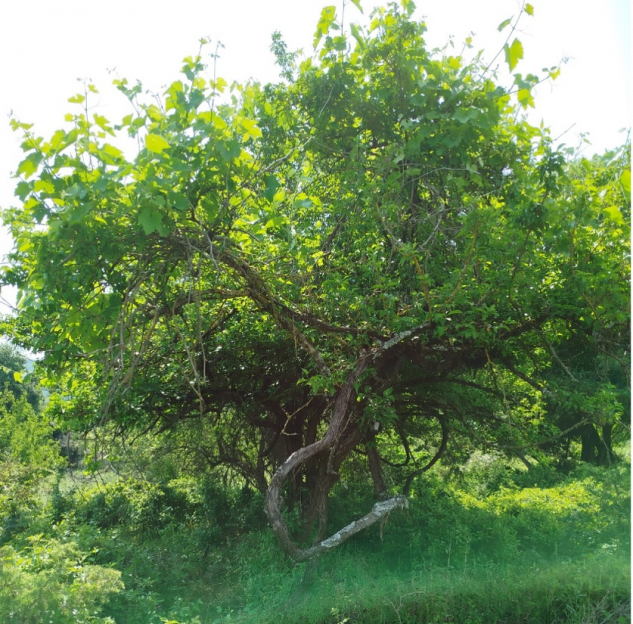
“From the Neolithic settlement of Dikili Tash to the wild grapevine varieties of Mount Pangaion, a 6,000-year-old wine story.”
In the heart of Eastern Macedonia, where ancient myth meets science, researchers from ELGO–DIMITRA are uncovering the deep and uninterrupted relationship between the wider area of Philippi and viticulture. In the shadow of the imposing Mount Pangaion and just a few steps from the archaeological site of ancient Philippi, the Neolithic settlement of Dikili Tash has brought to light evidence of a wine-making tradition that stretches back at least 6,300 years.
“Dionysus leaves Pangaion behind, but he leaves his symbol of power: the vine. It is remarkable how a mythical narrative today quite literally meets the genetic traces of the plant itself in the very same geographical area,” says Dr. Georgios Merkourópoulos, researcher at the Institute of Olive Tree, Subtropical Crops and Viticulture of ELGO–DIMITRA.
This unique “crossroads” of mythology and science is rarely found elsewhere. Here, cultural memory and the natural evolution of the landscape appear to have progressed hand in hand for millennia.
A return to the wild grapevine
Prompted by the archaeological findings and the question of whether the wild grapevine still survives in the area, researchers from the Institute of Olive Tree, Subtropical Crops and Viticulture, and the Institute of Plant Breeding and Genetic Resources launched targeted field expeditions in the countryside surrounding Philippi. In forested areas, along streams, on the slopes of Mount Pangaion, as well as near the springs of the Angitis River, more than 100 vines of wild grapevine (Vitis vinifera subsp. sylvestris) were identified.
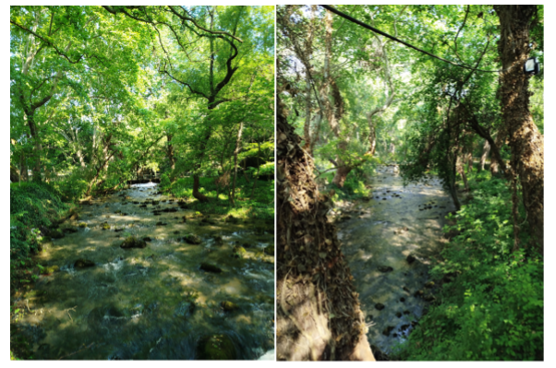
“We located vines at altitudes ranging from 150 to 800 meters, climbing on trees and shrubs, in places with abundant light and water. These are populations of exceptional interest—small, loose clusters with an astringent taste, although some vines bear sweet berries, as reported by elderly residents,” Dr. Merkourópoulos explains.
The collected samples were subjected to molecular analysis, which confirmed that they belong to genuine wild grapevine populations, genetically distinct from cultivated varieties. Some vines exhibited increased fruitfulness, opening up the possibility of experimental vinification in the future.
“Each vine we identify potentially represents a distinct variety. And some of them produce enough fruit to allow small-scale experimental winemaking. The question is not only whether the wild grapevine has survived; it is what it can tell us today about the past—and about the future,” the ELGO–DIMITRA researcher notes.
The documentation and conservation of these populations is not merely of botanical or historical interest. At a time of intense climate change, the wild genetic pool of the grapevine may prove to be a valuable resource for improving the resilience of cultivated varieties.
When sciences enter into dialogue
The simultaneous discovery of “living” wild grapevines in the Philippi area and Neolithic archaeological evidence has created a rare opportunity for scientific dialogue across disciplines.
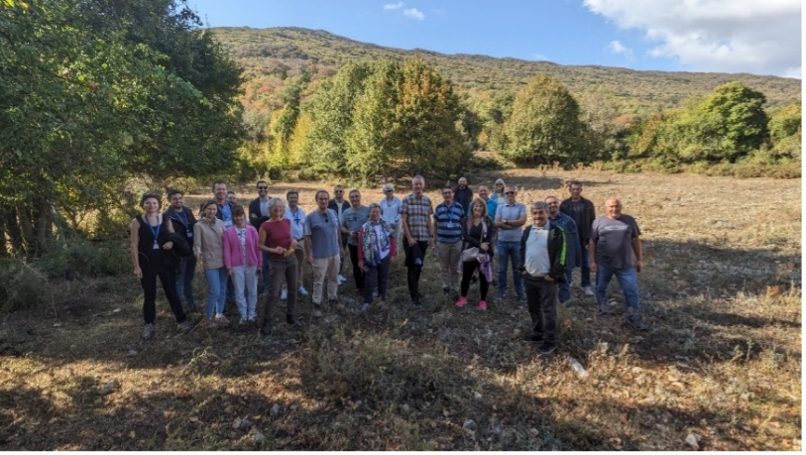
In 2023, within the framework of the European Programme on plant genetic resources ECPGR (European Cooperative Programme for Plant Genetic Resources), a two-day workshop was held in Philippi and at the Dikili Tash settlement, bringing together 35 specialists from 15 countries. Researchers combined expertise in genetics, viticulture, biodiversity, and archaeology.
“The collaboration between archaeology and biology in Philippi opens a new chapter in the study of our cultural and agricultural heritage. Here, we are not simply studying a plant—we are exploring the relationship between humans and wine from the dawn of history to the present day,” says Dr. Merkourópoulos.
Researchers now aim not only to document the natural continuity of the wild grapevine but also to establish a network for the protection and promotion of the area. This initiative aims to showcase the unique character of the landscape, connecting natural and cultural heritage with scientific research and rural development.
Learn more: Merkouropoulos G, Ganopoulos I, Doupis G, Maul E, Rockel F (2025) Molecular characterization and ex-situ conservation of wild grapevines grown in the area around the Neolithic settlement of Dikili Tash, Greece. Agriculture 15, 1301.
https://doi.org/10.3390/agriculture15121301
Contact: Dr. Georgios Merkouropoulos, ELGO-DIMITRA, Institute of Olive, Subtropical Plants & Viticulture, Lykovrysi, merkouropoulos@elgo.gr
Text: Alexandra Sachini