DIRECTORATE GENERAL OF
AGRICULTURAL RESEARCH
AGRICULTURAL RESEARCH
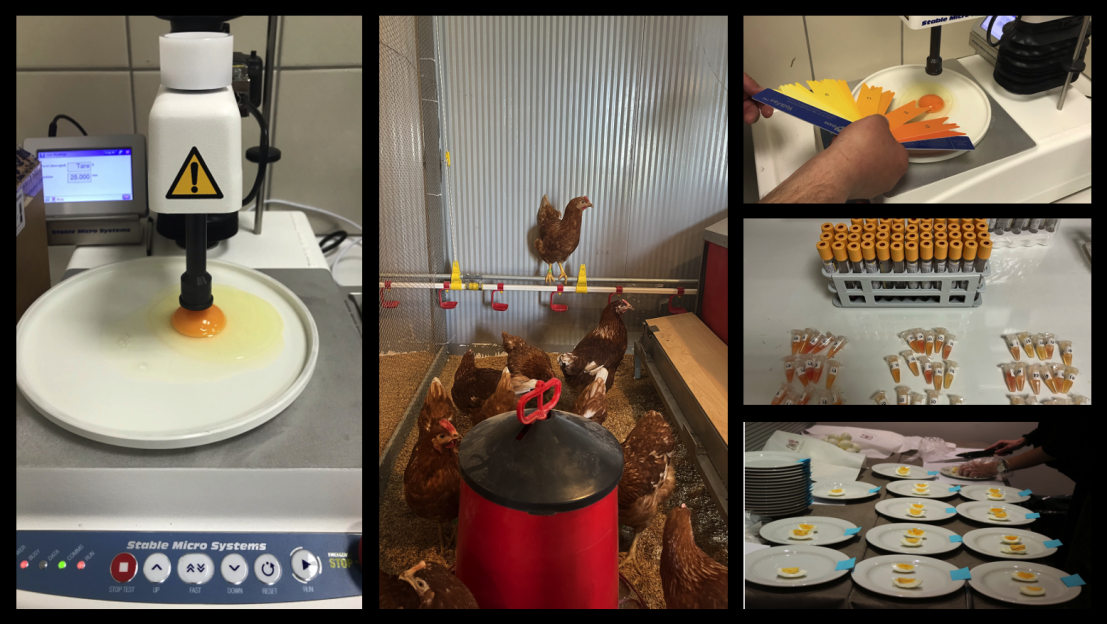
An innovative approach to egg production focuses on health, animal welfare, and sustainability.
Research in the field of sustainable agriculture and the production of high-quality food is gaining increasing importance, as demand grows for products that combine human health, animal welfare, and environmental respect. Τhe Institute of Veterinary Research of ELGO-DIMITRA has implemented a pioneering project focusing on the production of eggs enriched with beneficial fatty acids for the consumer, through the inclusion of olive paste in the diet of laying hens.
Dr. Anna Dedousi, scientific coordinator of this project, describes the main focus of the initiative as follows: “Our study focused on incorporating olive paste – a by-product of olive oil extraction with a significant environmental footprint – into the diet of laying hens. The goal was to improve the quality and nutritional value of eggs, enhance bird health and welfare, and boost productivity. This is a nutritional strategy aimed at creating an innovative, value-added product of enhanced nutritional composition, produced according to the principles of the circular economy and green growth, while also promoting the health and welfare of poultry”.
The long-term experimental process, conducted in accordance with strict ethical and scientific research protocols, yielded impressive, measurable results on multiple levels. As Dr. Dedousi explains, “One of our most important findings was the positive effect of olive paste on eggshell quality. Eggs from hens that consumed olive paste had on average, thicker and stronger shells, with a reduction of up to 34% in the proportion of eggs with cracked shells compared to the control groups”.
Improved eggshell quality is vital to the egg industry, as damaged or cracked eggs cause economic losses throughout the production and distribution chain, amounting to 8%-11% of total egg output. At the same time, food safety is enhanced by reducing the risk of contamination from pathogens entering through cracked shells. In other words, the inclusion of olive paste strengthens the resilience of the final product, making it more sustainable and commercially competitive.
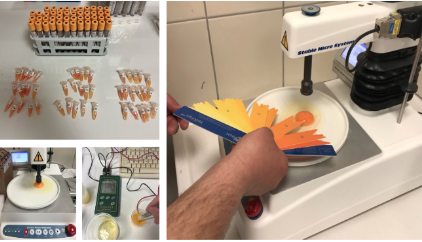
In addition, a significant improvement was observed in yolk coloration, a characteristic directly linked to modern market preferences. “Consumers and industry professionals prefer eggs with a deeper-colored yolk. The olive paste led to a notable enhancement in this trait, with yolks showing a darker yellow hue compared to the controls. As a result, these eggs are considered value-added products that can increase farmers’ income,” notes the ELGO-DIMITRA researcher.
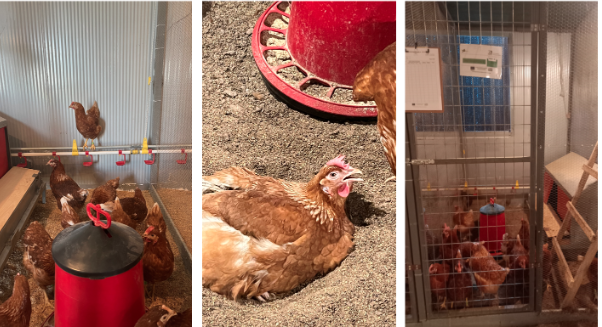
The study also addressed animal welfare by implementing an alternative rearing system (floor with litter), in line with the European Directive on the protection of laying hens. This ensures not only the quality of the final product but also the improvement of animal living conditions.
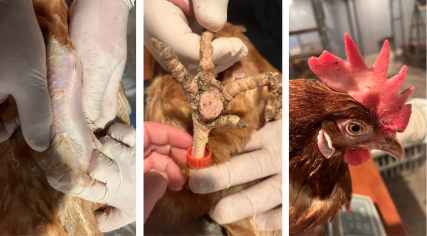
Various welfare indicators were assessed, such as footpad dermatitis and keel bone injuries. Valuable data were collected on bird behaviour, including social interactions and environmental engagement, as well as blood biochemical markers reflecting their health status. The study also evaluated the dietary intervention’s impact on gut microbiota, with particularly interesting findings. Specifically, it was found that olive paste has a prebiotic effect, promoting the growth of microorganisms that support intestinal health in poultry, potentially reducing the need for antibiotics, aligning with the practices of sustainable and circular poultry farming and the One Health approach. This holistic perspective makes the project a model for sustainability and responsible livestock farming.
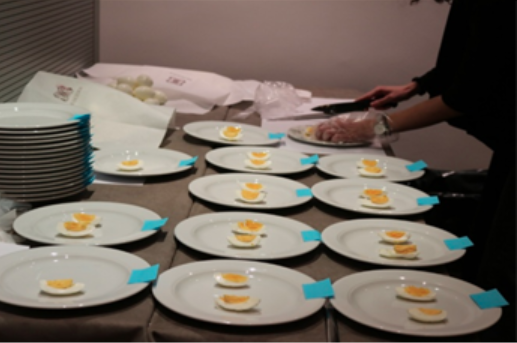
As part of the project, both the nutritional value and certain sensory properties of the eggs (aroma, taste, and yolk color) were evaluated through specialized analyses and a taste panel. Regarding nutritional value, a key finding was the reduction in cholesterol levels in eggs from hens fed with olive paste. “We observed up to an 11.4% decrease in cholesterol content compared to eggs from control groups — a result that may have significant health benefits for consumers. Of course, this warrants further research. Additionally, an increased content of polyunsaturated fatty acids and polyphenols was detected, enhancing the nutritional value of the eggs and making them a complete, high-quality food product,” explains Dr. Dedousi.
It is also worth noting that the taste panel results showed a positive influence of olive paste on the sensory characteristics of the eggs evaluated.
In conclusion, according to Dr. Dedousi, “Feeding floor-reared laying hens with olive paste represents a sustainable strategy, as it contributes to the production of eggs with improved shell quality, upgraded nutritional value, and sensory properties that are appealing to consumers.”
Beyond its findings, the research lays the foundation for the commercial exploitation of this product. A future development plan has already been designed, in collaboration with the poultry enterprise involved in the project, to introduce olive paste-enriched eggs to the market. These eggs will offer consumers a new option with high nutritional value and ecological sensitivity. This prospect opens new avenues for Greek primary production, promoting innovation and sustainability in a product with long-term viability and added value.
Dr. Dedousi outlines the vision behind this innovative endeavor: “We firmly believe that incorporating natural by-products, such as olive paste, into animal feed can contribute to the production of high nutritional value foods, while respecting the environment, animal health, and welfare. This approach serves both the producer and the consumer, as well as the ecosystem in which we operate.”
In this way, the scientific community, primary production, and the market join forces in an initiative that combines innovation, environmental awareness, and social responsibility, bringing to the forefront a new model of food production that addresses today’s needs and challenges.
The research was part of the project titled "Production of eggs with high content of beneficial fatty acids for the consumer, through the inclusion of olive paste in the diet of laying hens", acronym OlivEgg, project code KMR6-0084177, under the “Innovation Investment Plans” action of the Operational Programme “Central Macedonia.
Information: Dr. Anna Dedousi, Veterinarian, Appointed Researcher, Institute of Veterinary Research, Thessaloniki, dedousi@elgo.gr
Text: Alexandra Sachini