DIRECTORATE GENERAL OF
AGRICULTURAL RESEARCH
AGRICULTURAL RESEARCH
“The microbial richness of Greek milk and traditional cheeses is opening new paths for innovation in dairy production.”
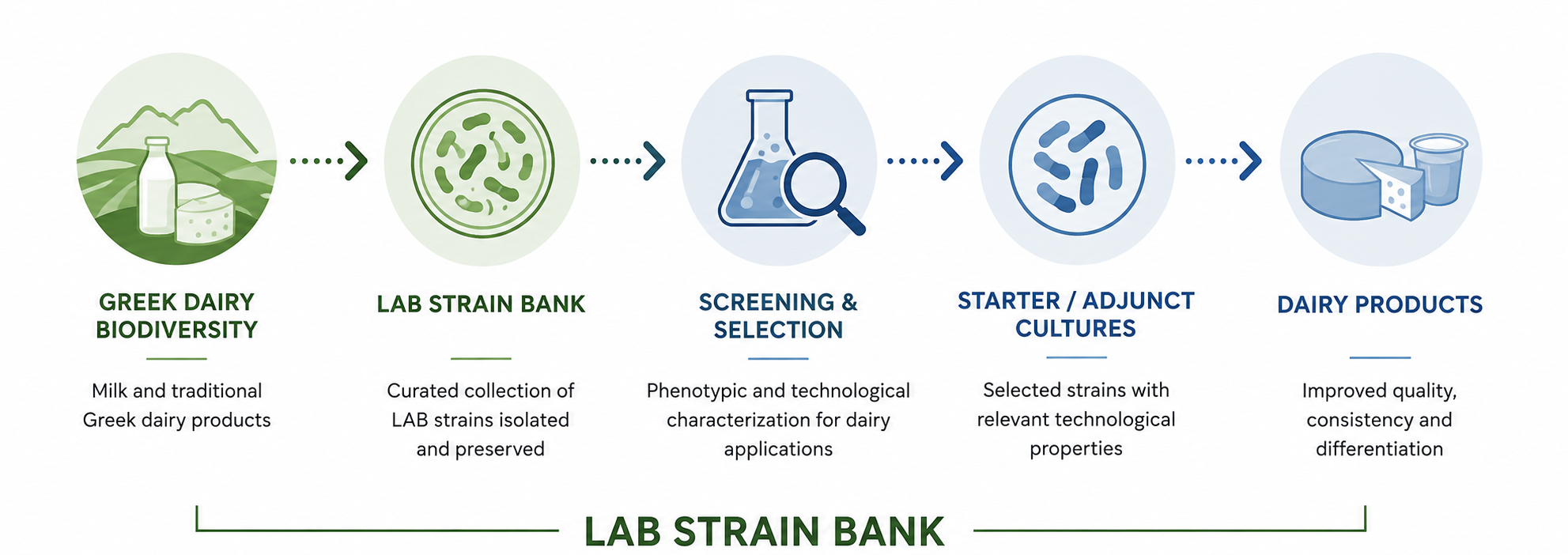
Every traditional cheese harbours an invisible world of microorganisms. Among them, lactic acid bacteria (LAB) play a crucial role in fermentation and ripening, influencing acidity, texture, aroma, flavour and, ultimately, the overall quality of the product.
For the Department of Milk Science at the Institute of Technology of Agricultural Products of ELGO-DIMITRA, this natural microbial biodiversity represents valuable biological material that deserves to be documented, preserved, studied and harnessed for the benefit of the Greek dairy sector.
A Microbial Wealth Within Milk and Greek Cheeses
The research effort began with the study of the microbial ecology of sheep’s milk and traditional Greek cheeses, such as Feta and Kefalograviera. Numerous strains of lactic acid bacteria were isolated from these products, preserved in the Department’s collection, and used as the basis for systematic characterization and selection.
 The bacterial strains were studied for their genetic diversity, milk-acidifying capacity, metabolism of different compounds, tolerance to stress conditions, technological properties, and characteristics related to their safe use in food. This research activity has been documented in international scientific publications, providing insights into the composition and functional diversity of the indigenous microbiota.
“Traditional dairy products are not only part of our dietary and cultural heritage. They are also reservoirs of valuable microbial biodiversity. Our goal is to preserve this microbial wealth, understand its functions, and explore how it can be harnessed using modern scientific tools,” says Dr. Marios Mataragas, researcher at the Department of Milk Science of ELGO-DIMITRA.
From Strain Collection to Targeted Selection
The next step is to identify microorganisms that possess the right combination of characteristics to be used as starter or adjunct cultures in cheesemaking.
The modern approach combines genome sequencing and bioinformatic analysis with phenotypic characterization, making it possible to reveal not only the genetic potential of each strain but also how that potential is expressed in practice. In this way, strain selection moves beyond empirical evaluation towards a more rational and predictive approach to culture design.
“The critical question is not simply which strain grows best in the laboratory. We want to understand what function it can perform within the complex ecosystem of a cheese and, above all, how it can interact with other strains to achieve a predictable and desirable outcome,” Dr. Mataragas points out.
From the Laboratory to Real-World Cheesemaking
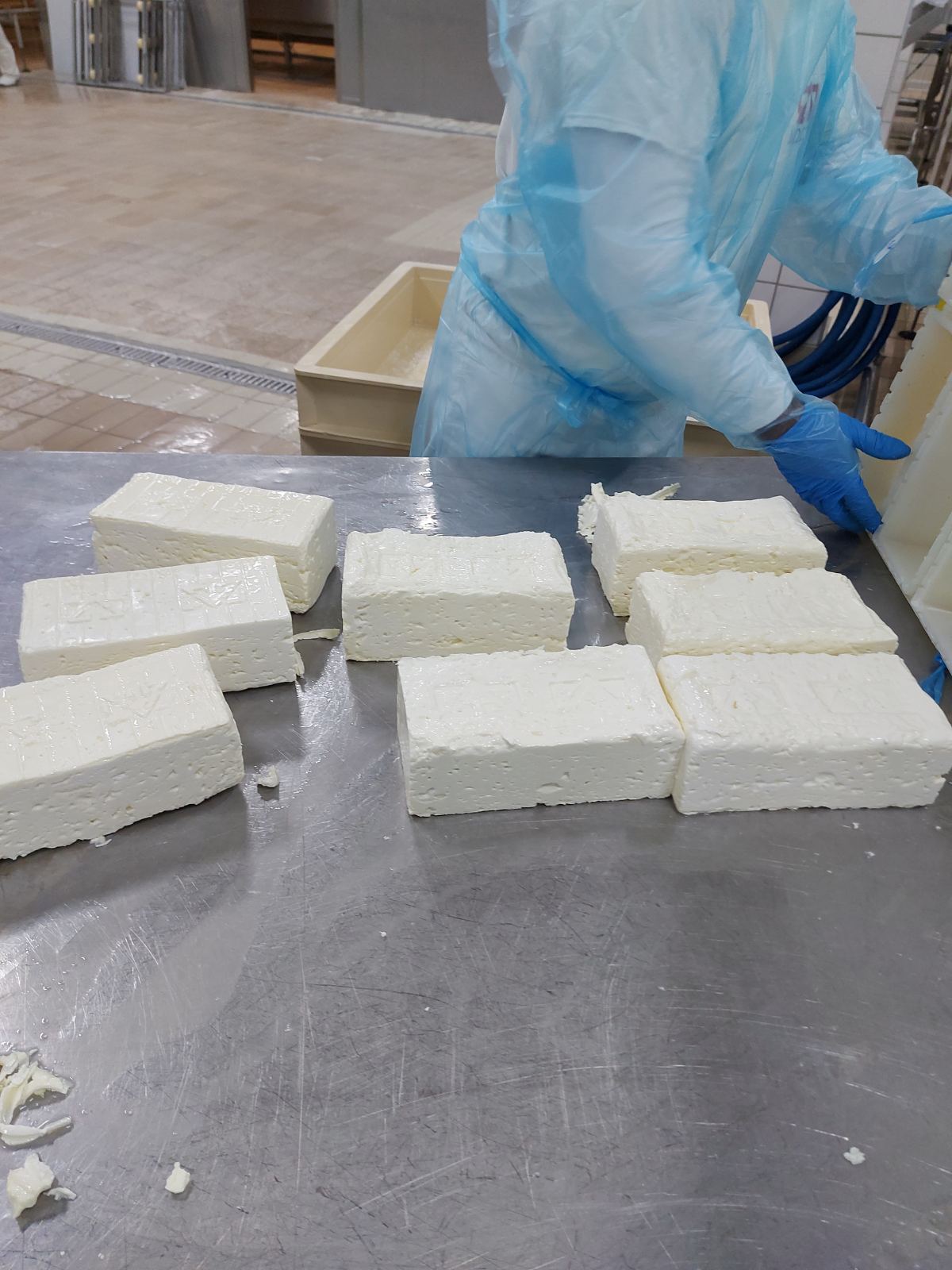
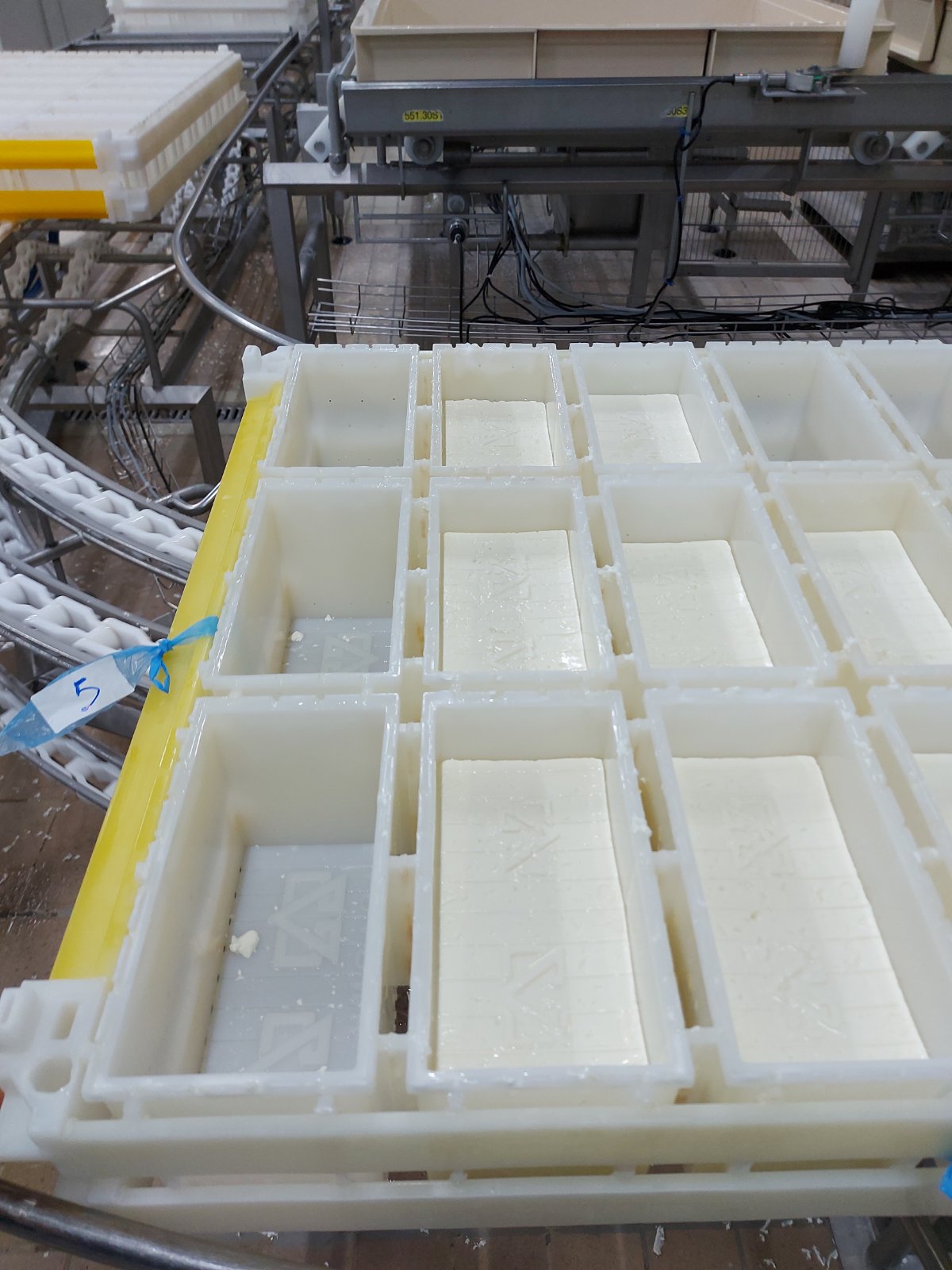
The value of a candidate microorganism is ultimately confirmed when it moves from the laboratory into the food itself. For this reason, selected strains have been evaluated in milk and in pilot-scale cheesemaking trials, in some cases in collaboration with the dairy industry.
Real production conditions are particularly complex, as microorganisms must respond to changes in pH, salt concentration, competition with other microorganisms, and the different conditions encountered during ripening. At the same time, combinations of strains with complementary functions are being investigated, with the aim of rationally designing microbial communities that can contribute in a predictable way to the characteristics of the final product.
When the Genome Meets the Cheese Microbiome
The research is now expanding towards the study of the entire microbial ecosystem of cheese. The application of advanced omics technologies, such as metagenomics, metatranscriptomics and metabolomics, enables researchers to investigate the microbial community, the metabolic pathways that are active, and the metabolites produced during ripening.
The first results highlight the potential to link the composition and functional activity of the microbial community with the chemical profile and quality characteristics of the cheese. The aim is to understand the pathway from the genome of an individual strain to its function within the microbiome and, ultimately, to its contribution to the final product.
“Our ambition is to connect the genome of a strain with its behaviour in milk, its functional activity within the microbial community and, ultimately, its contribution to the characteristics of the cheese. The first results are particularly encouraging and are now allowing us to investigate this pathway from gene to final product,” the researcher notes.
From Research Knowledge to Application
The value of the collection extends beyond the preservation of biological material. The scientific characterization of the strains and publication of the research findings have contributed to attracting interest from the dairy industry in the further evaluation of selected strains, while steps have also been taken towards their future protection and exploitation.
Thus, a microorganism isolated from a traditional Greek dairy product can, through years of characterization and evaluation, evolve into a candidate culture for future industrial applications.
The systematic preservation of indigenous microorganisms also contributes to safeguarding the microbial biodiversity that has developed within Greek dairy ecosystems, while creating opportunities for new products and cultures with differentiated and desirable quality characteristics.
“For us, research reaches its full value when knowledge finds its way back into production. We start with milk and cheese, isolate and study their microorganisms, and seek, through science, to bring them back into cheesemaking as selected and thoroughly characterized cultures. It is a cycle that connects Greek dairy tradition with modern biotechnology and innovation,” concludes Dr. Mataragas.
This research journey demonstrates how a natural, invisible resource—the microbial biodiversity of Greek dairy products—can, through systematic scientific research, be transformed into knowledge, technology and, potentially, new tools for the Greek dairy sector.
Information: Dr. Marios Mataragas, ELGO-DIMITRA, Institute of Technology of Agricultural Products – Department of Milk Science, mmatster@elgo.gr
Text: Marios Mataragas, Alexandra Sachini